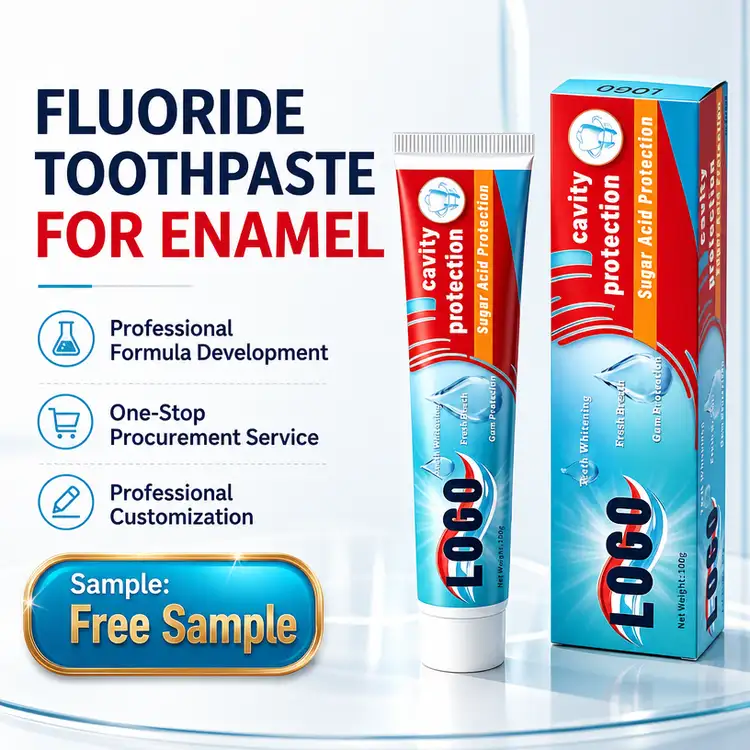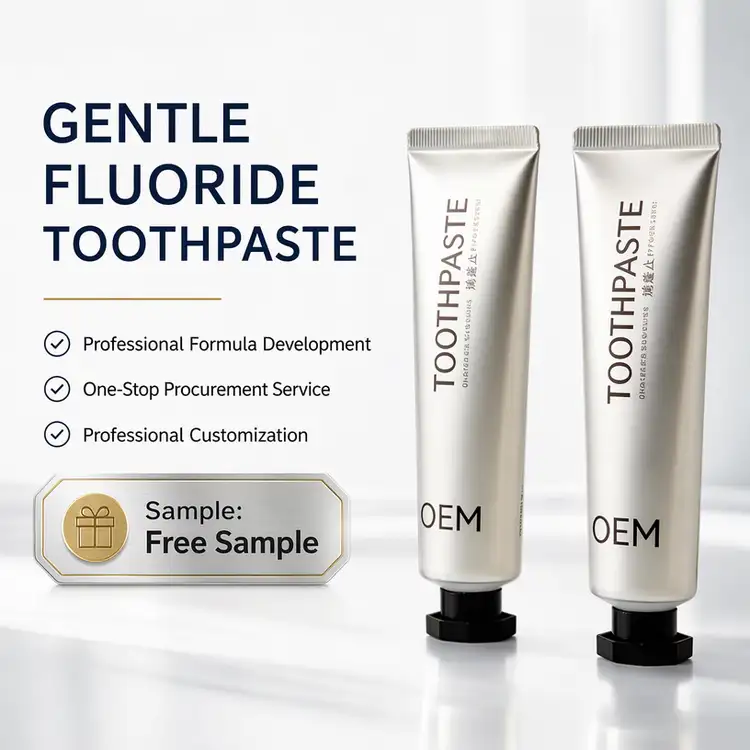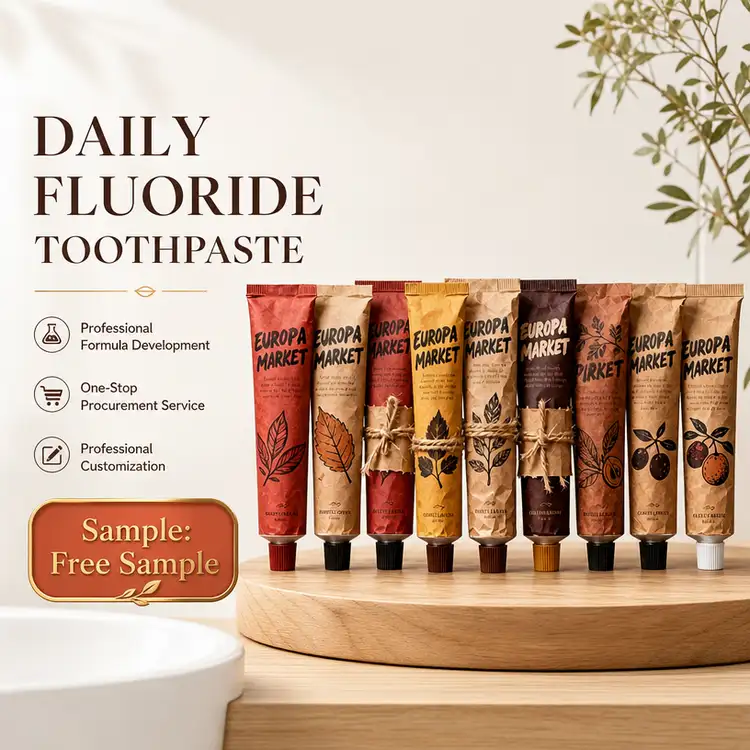
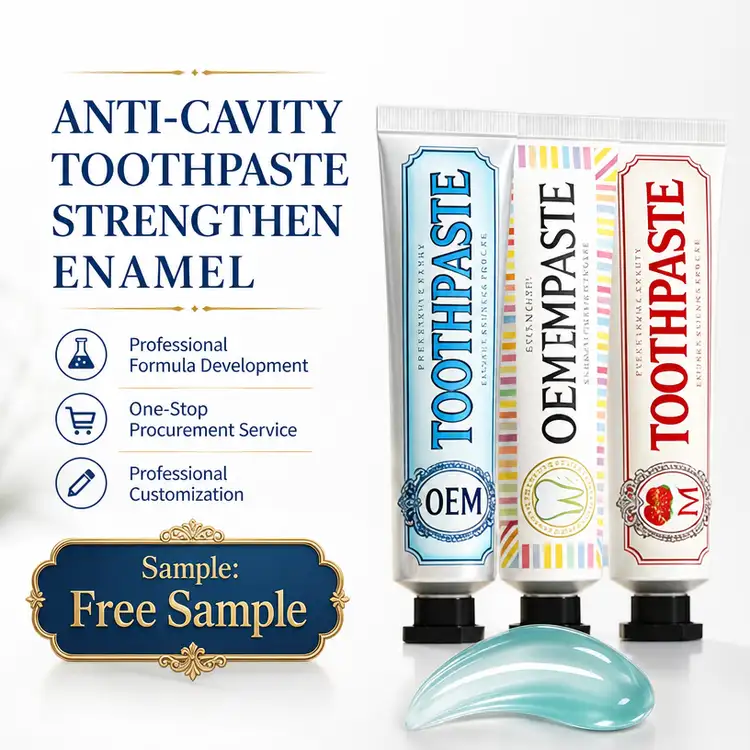
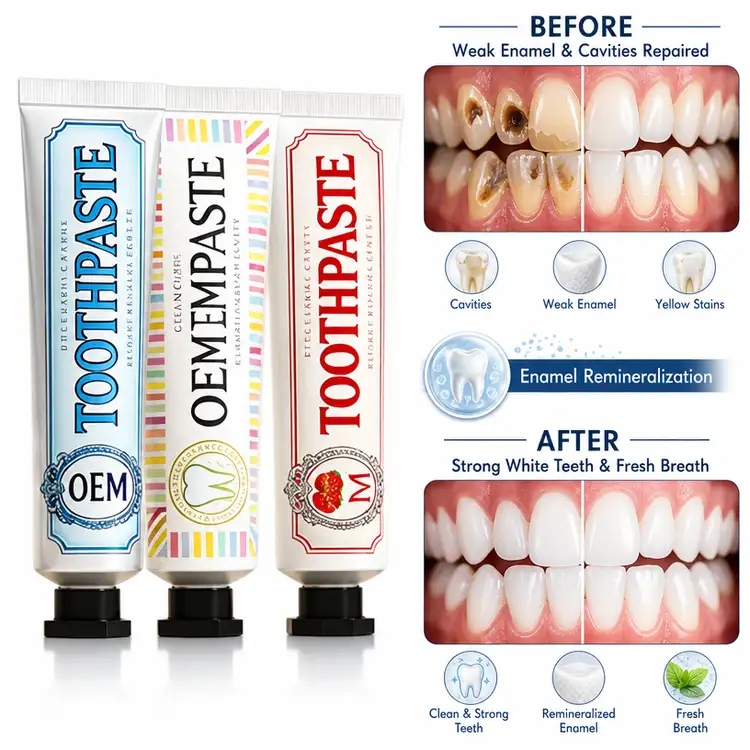

Enamel-Strengthening Anti-Cavity Toothpaste is designed around a clear daily-care message: clean the teeth regularly, use the approved fluoride formula, and follow the product label. The phrase “strengthen enamel” must be matched to the final formula and evidence; it should not be used to promise repair of cavities or restoration of lost enamel without specific substantiation.
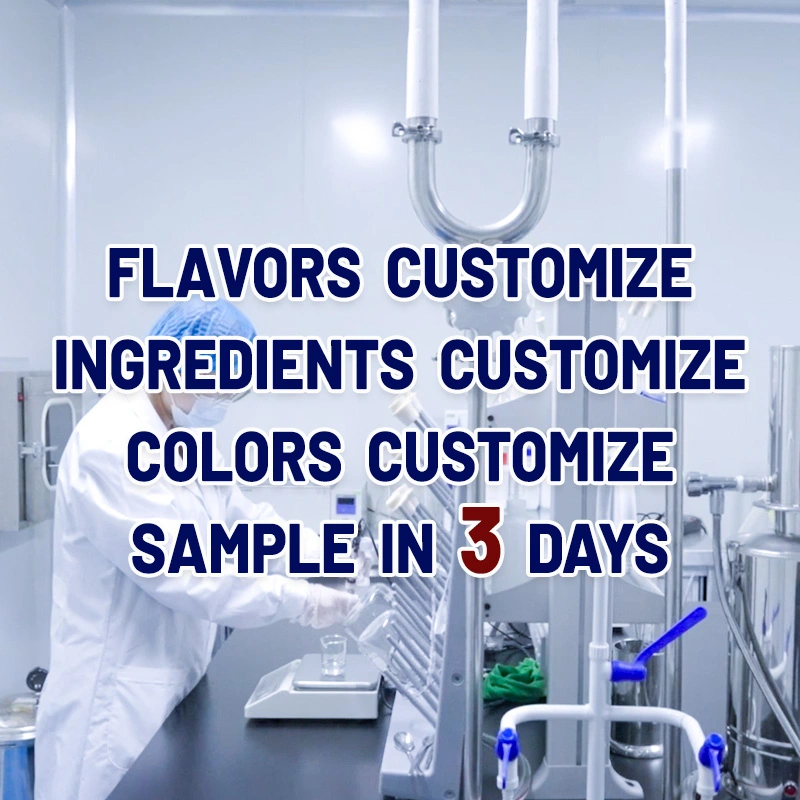
The toothpaste can be developed for oral-care brands, supermarkets, retail chains, online stores, pharmacies where permitted, and private-label product ranges. Formula direction, paste texture, flavour, packaging, samples, MOQ, and technical documents can be reviewed before production.
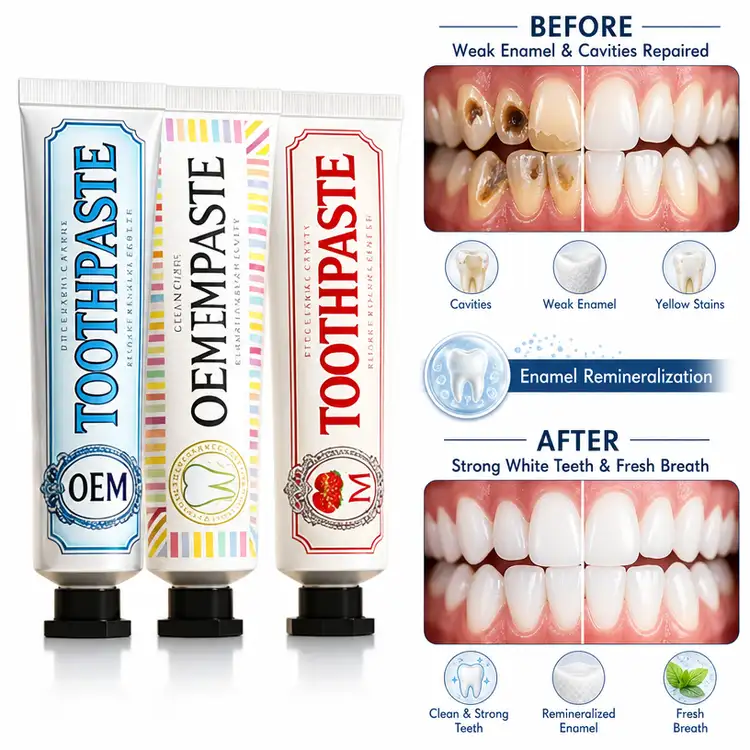
Cavity protection positioning refers to regular oral care that may help support cavity-related protection when the approved fluoride formula and evidence meet the requirements of the target market. It is not a claim that the toothpaste can remove an existing cavity.
Fluoride is the main active-ingredient direction in this product concept. The final fluoride compound, concentration, stability, and consumer-facing wording must be confirmed in the technical documents, approved label, and destination-market requirements.
Strengthen enamel is a consumer-facing phrase that needs careful review. Depending on the final formula and evidence, the approved wording may refer to supporting enamel care, helping maintain the tooth surface, or another permitted benefit. It should not automatically mean that lost enamel is rebuilt.
Enamel is the hard outer layer of the tooth. It is exposed to food, drinks, acids, brushing, and daily wear. A fluoride toothpaste for enamel care is generally described around regular cleaning, fluoride use, and suitable brushing habits rather than dramatic repair claims.
The toothpaste is designed to help remove food residue and plaque from tooth surfaces during brushing. Brushing technique, frequency, diet, and individual oral conditions also affect daily results.
The formula can be adjusted for balanced cleaning, suitable foam, easy rinsing, and a manageable aftertaste. Final abrasivity, viscosity, spreadability, and mouthfeel depend on the approved formula and sample.
The formula may also be developed for ordinary external stains associated with coffee, tea, and other coloured drinks. Any whitening or stain-care wording should be based on the tested performance of the finished product.
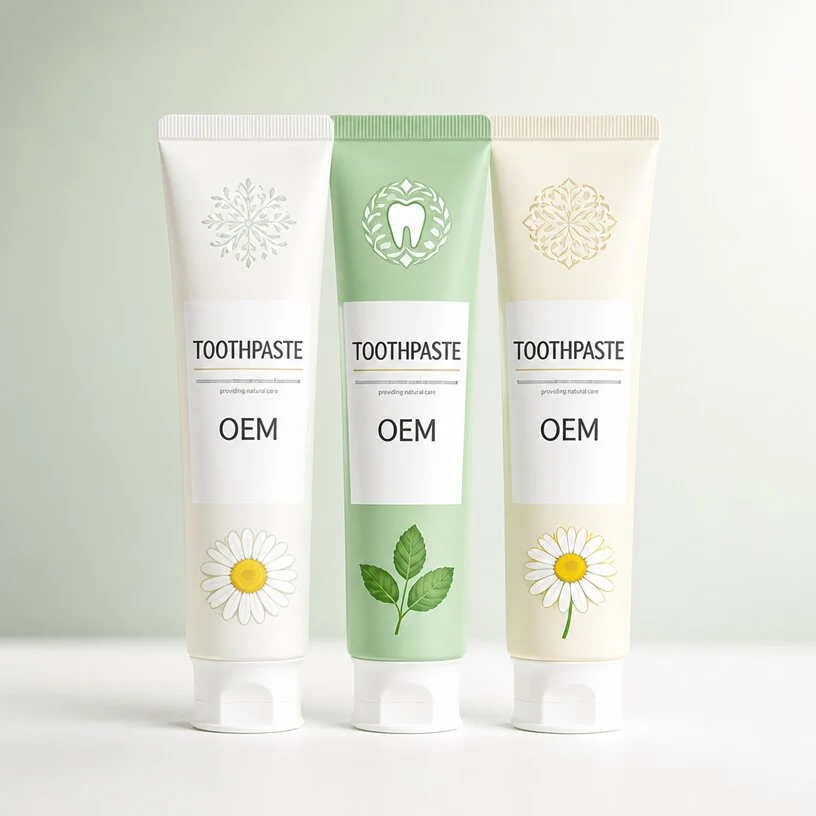
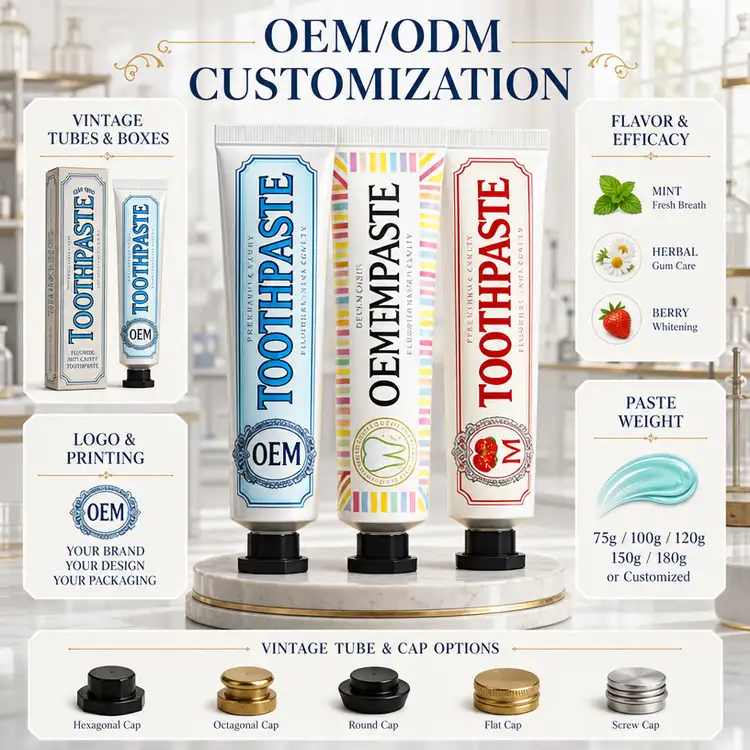
Mint, mild mint, cooling mint, fruit, citrus, or a light botanical profile can be evaluated. Tube material, capacity, cap style, printing, surface finish, and carton design can be selected for the intended retail channel.
Enamel-Strengthening Anti-Cavity Toothpaste is a clear daily-care concept for brands that want to combine cavity protection and enamel-care communication. It is suitable for a fluoride toothpaste range that explains the product in practical, customer-friendly language.
The final product description should be based on the approved fluoride ingredient, concentration, formula design, product tests, label wording, and regulations in the target sales country. It is not presented as a dental treatment or a replacement for professional care.
A clear way to explain the product is: it is a daily toothpaste for regular brushing, cavity-care positioning, and enamel-care support. Fluoride is included according to the approved formula. The exact meaning of “strengthen enamel” depends on the final evidence and the wording permitted in the target market.
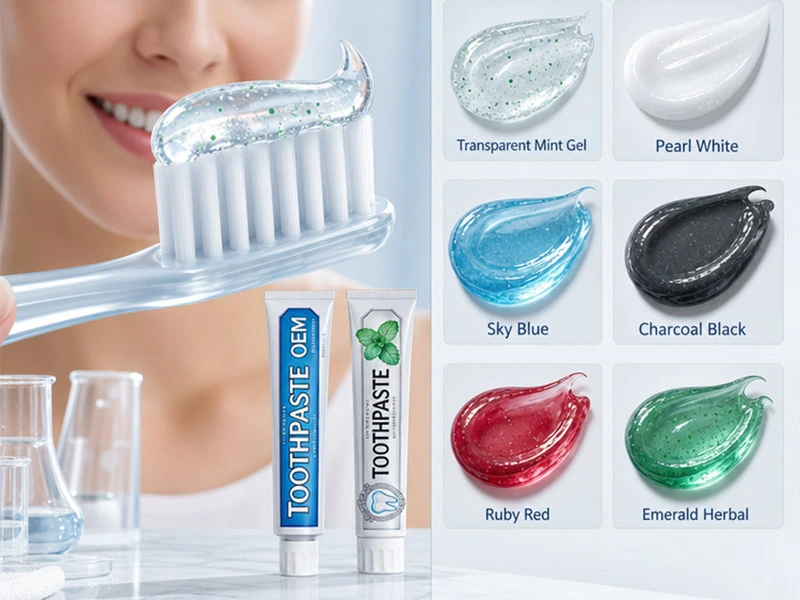
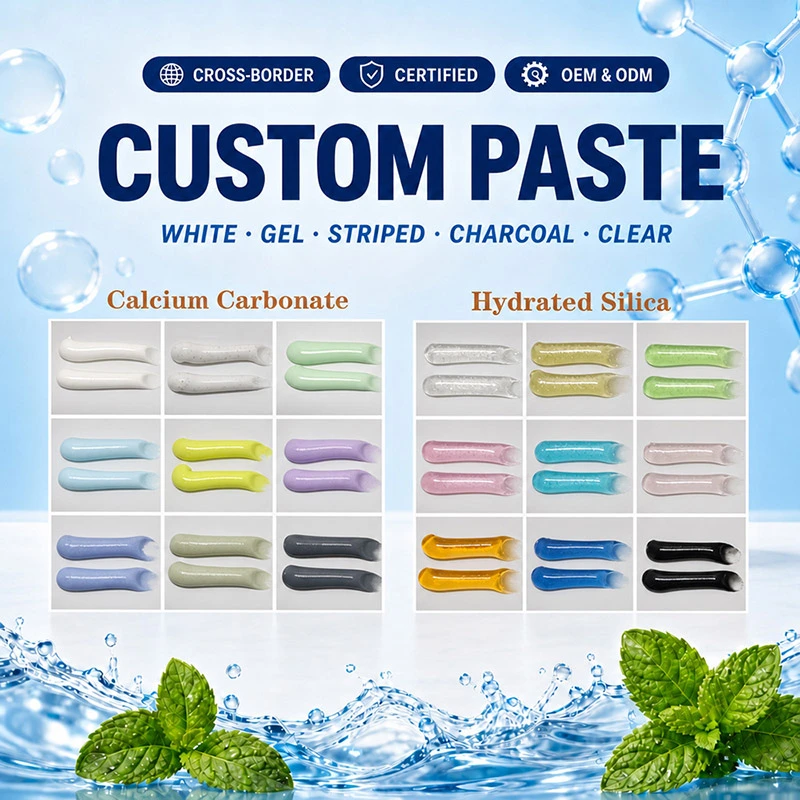
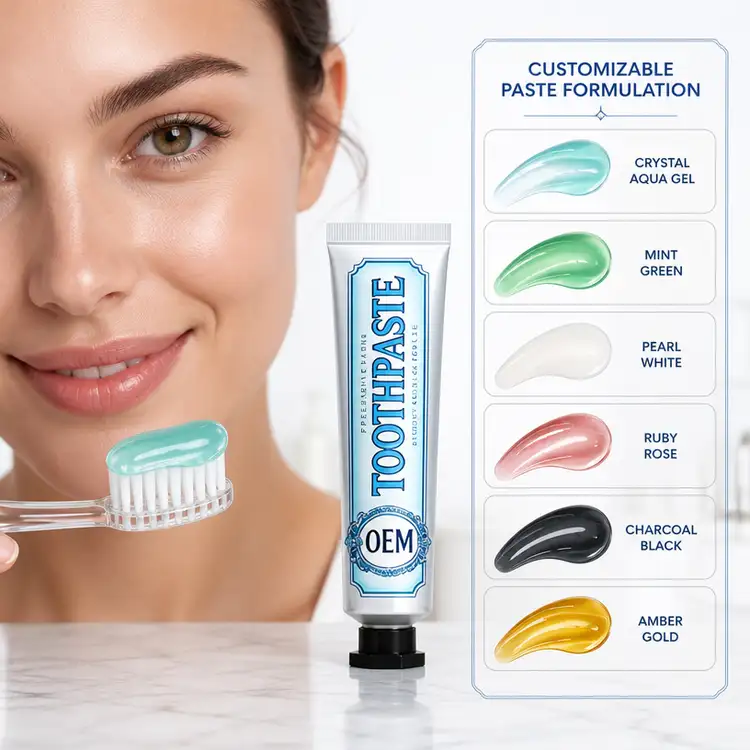
Depending on the formula, the paste may be white, pearl-white, lightly coloured, or another approved shade. It may have a smooth, fine, medium, or softer texture. Thickness, gloss, foam, spreadability, rinsing sensation, and mouthfeel should be checked against the final production sample.
Mint profiles may include mild spearmint, peppermint, or cooling mint. Fruit and citrus options may include berry, watermelon, strawberry, citrus, or mixed fruit. A light botanical note can also be considered when suitable for the formula and target market.
Fluoride concentration, target age group, brushing frequency, warnings, storage, rinsing instructions, enamel-care wording, and disposal information vary by formula and market. The finished product must follow the approved local label rather than a general template.
Unless specifically supported by the final formula and evidence, “strengthen enamel” should not be presented as repairing cavities, rebuilding lost enamel, reversing advanced enamel damage, or replacing professional dental treatment.
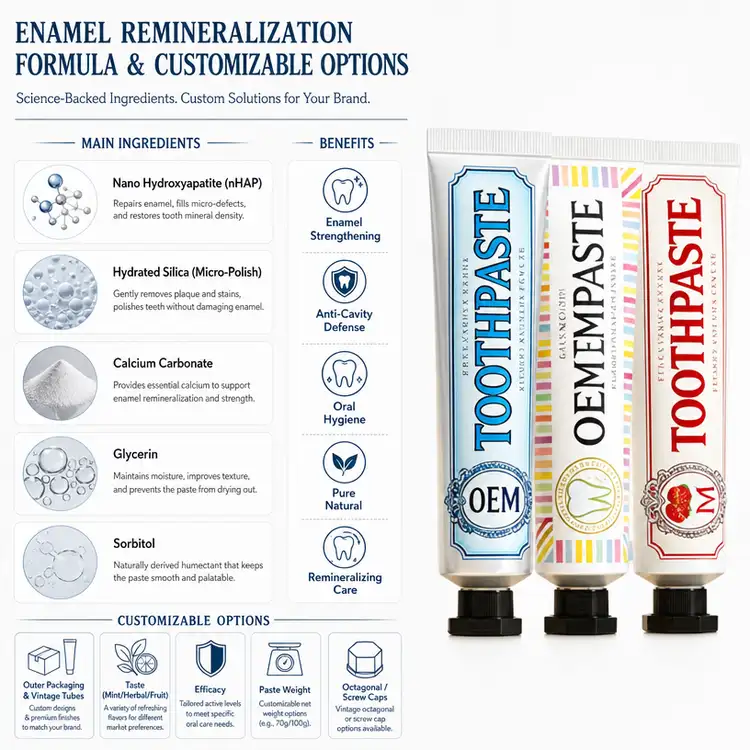
• Suitable for regular adult oral care.
• Combines a clear cavity-protection and enamel-care product direction.
• Provides a fluoride formula concept, subject to the approved ingredient and concentration.
• Explains enamel care in a way that is easy for customers to understand.
• Supports daily cleaning of tooth surfaces and removal of ordinary food residue.
• Offers flexible paste, foam, rinsing, and flavour options for different markets.
• Suitable for private-label, retail, e-commerce, sampling, and wholesale projects.
Product name: Enamel-Strengthening Anti-Cavity Toothpaste
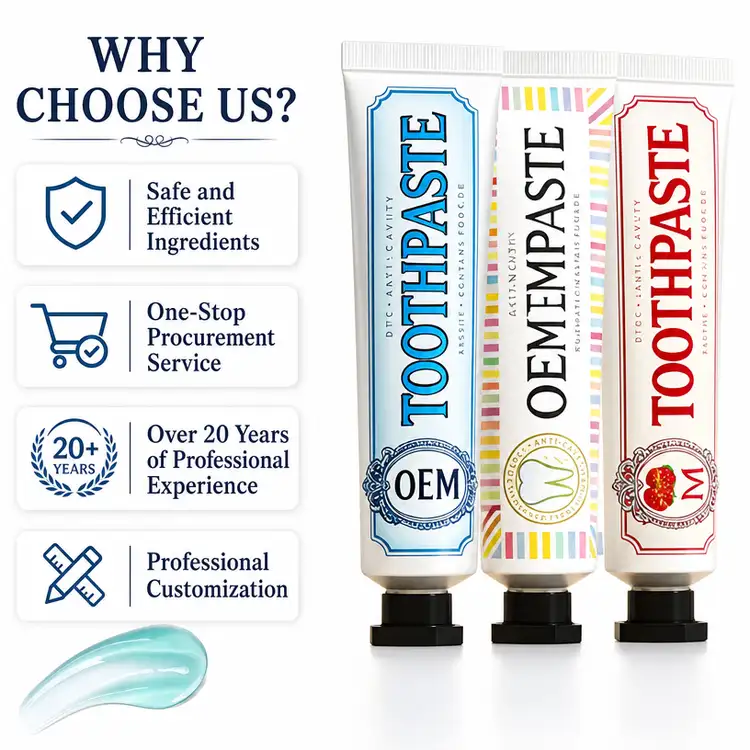
Brand: Guangzhou Bell; private-label branding available
Product format: Adult daily oral-care toothpaste with enamel-care and cavity-protection directions
Intended user: Adults; final age wording subject to the approved label and market requirements
Key ingredient direction: Fluoride; exact compound, source, concentration, and formula function to be confirmed
Fluoride concentration: To be confirmed according to the approved formula, target user group, target market, and label requirements
Enamel-care direction: Used only when supported by the final formula, evidence, approved label, and applicable regulations
Strengthen-enamel wording: Must be matched to the final evidence and must not imply automatic repair or restoration of lost enamel
Cavity-protection wording: Used only when supported by the final fluoride formula, evidence, approved label, and destination-market rules
Repair or remineralisation wording: Requires specific substantiation, technical review, and local regulatory approval
Cleaning profile: Daily cleaning of tooth surfaces and removal of ordinary food residue and plaque
Net weight options: Selected according to the destination market, retail channel, and pack architecture
Tube material: ABL aluminum-plastic tube or PBL plastic tube, subject to artwork and filling requirements
Tube capacity and diameter: To be confirmed according to selected net content and filling volume
Cap options: Upright step-style cap or another compatible design
Paste colour: White, pearl-white, lightly coloured, or another approved shade based on the formula
Paste texture: Smooth, fine, medium, or soft extrusion texture; confirmed by approved sample
Abrasive system: Reviewed according to enamel-care direction, cleaning feel, testing, and target-market requirements
Viscosity and foam: Adjusted according to formula, brushing feel, and target-market preference
Flavour options: Mild mint, cooling mint, fruit, citrus, botanical, floral, or another agreed profile
Whitening or stain wording: Used only when supported by the final formula, evidence, approved label, and applicable regulations
User instructions: Follow the approved label, including frequency, warnings, rinsing, and age guidance where applicable
Shelf life and storage: Confirmed by the approved label, stability information, and final storage instructions
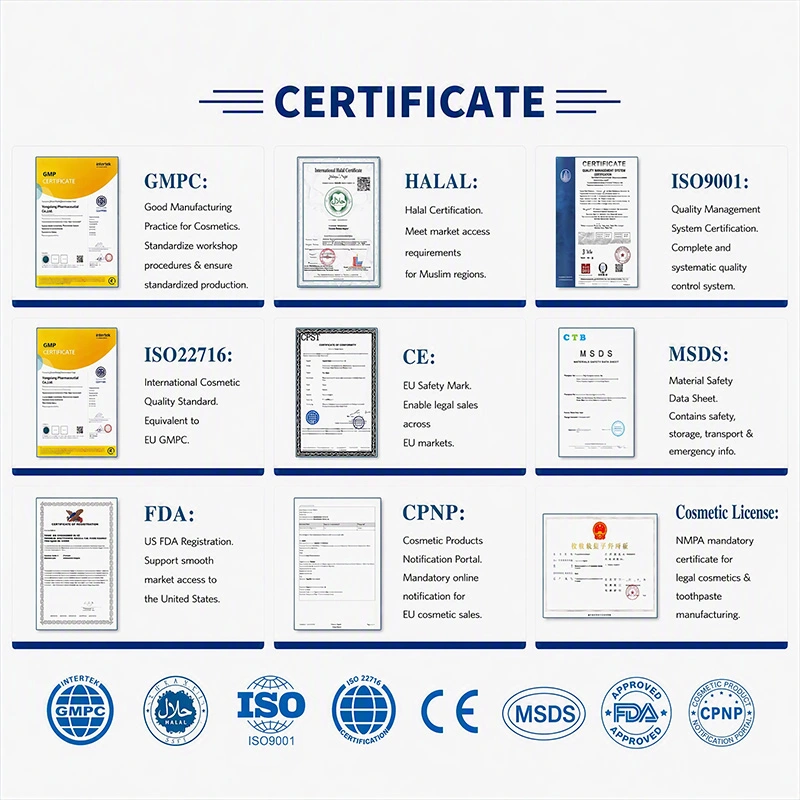
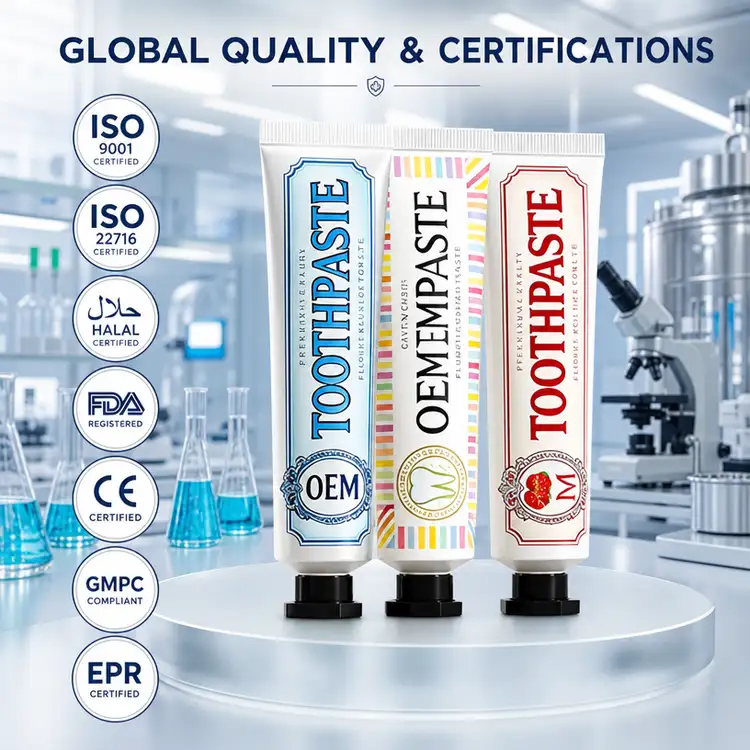
Quality documents: COA, SDS/MSDS, fluoride raw-material documents, stability information, microbial reports, and other documents subject to availability
MOQ and lead time: To be confirmed according to formula, concentration, packaging, artwork, order quantity, and production schedule
Enamel-Strengthening Anti-Cavity Toothpaste is developed for brands that want to lead with enamel-care communication while keeping a practical daily cavity-protection direction. The product concept brings together regular brushing, tooth-surface cleaning, and a fluoride formula that must be matched to the approved evidence and destination-market requirements.
Enamel is the hard outer layer of the tooth. It is exposed to acids from food and drinks, daily brushing, and normal wear. A well-structured product page should explain enamel care in plain language: support the tooth surface through regular cleaning and an approved formula, without promising to rebuild lost enamel or reverse advanced damage.
The fluoride direction gives the product a clear cavity-care foundation when the selected compound, concentration, formula, testing, and label support the wording. The toothpaste is designed for consistent use as part of an everyday brushing routine, not as a treatment for an existing cavity.
Enamel-care positioning should be supported by a balanced brushing feel. Abrasivity, paste spread, viscosity, foam, flavour intensity, cooling level, aftertaste, and rinsing sensation can be reviewed during sampling so the finished product is comfortable to use and easy for customers to understand.
The product can be developed for oral-care brands, retail chains, e-commerce stores, pharmacies where permitted, and wholesale programmes. Pack size, tube material, cap, carton, printing, surface finish, flavour, label language, warnings, and storage information can be coordinated for the intended market.
Confirm the destination country, target adult user, preferred enamel-care direction, fluoride preference, desired cleaning level, flavour, paste feel, retail channel, pack size, expected order quantity, and documentation needs.
Review the fluoride compound and concentration, enamel-care or strengthen-enamel wording, cavity-protection wording, repair or remineralisation language, age guidance, warnings, brushing instructions, rinsing information, and storage requirements.
Evaluate paste colour, texture, spreadability, foam, flavour, cooling level, aftertaste, rinsing feel, cleaning sensation, tube, cap, carton, artwork, label layout, and the clarity of the product explanation.
Finalise the formula, approved label, substantiated claims, packaging artwork, warnings, quality documents, MOQ, lead time, production schedule, and independent-site content before bulk production.
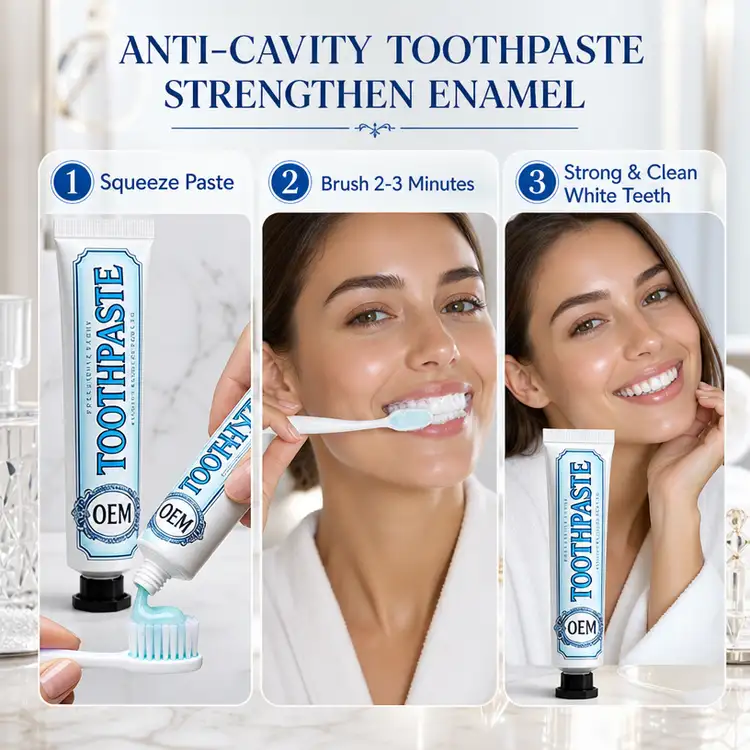
Apply only the amount stated on the approved product label to a toothbrush.
Brush according to the approved label instructions and do not exceed the recommended frequency.
Brush all tooth surfaces gently and pay attention to the gumline.
Spit out after brushing and follow the label's rinsing instructions.
Do not swallow the toothpaste. Keep away from children unless the approved label states otherwise.
Stop use if irritation or unusual discomfort occurs and seek professional advice when needed.
Use, storage, warnings, and disposal should follow the final approved product label.
It is an adult daily toothpaste concept led by enamel-care communication and supported by a cavity-protection direction. The final claim depends on the approved formula, fluoride concentration, evidence, label, and requirements of the target market.
It is a proposed customer-facing direction that must be supported by the finished formula and evidence. The approved wording may refer to supporting enamel care or helping maintain the tooth surface; it should not automatically mean that lost enamel is rebuilt.
The product is intended for daily oral care and permitted enamel-care or cavity-protection positioning, not as a replacement for professional dental treatment. Repair or restoration wording requires specific substantiation and regulatory approval.
Fluoride is the key active-ingredient direction and may support cavity-protection or enamel-care communication when the final formula and evidence meet local requirements. Its exact function and wording depend on the compound, concentration, formula, and market.
The concentration must be confirmed from the approved formula and target-market requirements. It should not be assumed from the product name before the final technical specification is available.
The target-user wording and age guidance depend on the fluoride concentration, local requirements, and approved label. An adult product should not be applied to children without checking the final label and market rules.
The product may be positioned for daily cleaning or ordinary surface-stain care if supported by the final formula and tests. Any whitening wording must be confirmed before launch and should not be presented as a fixed-result treatment.
Smooth, fine, medium, and softer textures can be evaluated through samples. Mild mint, cooling mint, fruit, citrus, botanical, floral, and other agreed flavour profiles can be discussed.
Yes. Brand artwork, tube material, pack size, cap, printing, carton, label design, warnings, storage information, and other private-label requirements can be reviewed.
Depending on the project, documents may include COA, SDS/MSDS, fluoride raw-material documents, stability information, microbial test reports, and other relevant quality documents. Availability should be confirmed for the selected formula and market.
Send us your destination market, target adult user, preferred enamel-care wording, fluoride direction, flavour, paste feel, pack format, estimated order quantity, claim requirements, and documentation needs. Guangzhou Bell can review the brief and advise the next step for samples, quotation, and private-label production.
Fluoride identity, compound, concentration, enamel-care, strengthen-enamel, cavity-protection, cavity-care, repair, remineralisation, sensitivity, antibacterial, gum-care, whitening, and stain-care claims, abrasivity statements, flavour descriptions, paste specifications, shelf life, testing, certifications, warnings, storage instructions, user directions, and regulatory documents must be confirmed against the final formula, approved label, technical documents, test reports, and the regulations of the target sales country before commercial launch.
Address
No. A6-3, Saida International Industrial City, Xiqing District, Tianjin, China
Tel