The toothbrush contract manufacturing sector is undergoing structural adjustment. Traditional manufacturing clusters, exemplified by the toothbrush industrial base in Yangzhou, Jiangsu Province, have long dominated the global OEM market on the strength of complete supply chain support and large-scale capacity. However, as electric toothbrush penetration continues to rise and brand requirements for smart features and sustainability intensify, the competitive logic in contract manufacturing is shifting.
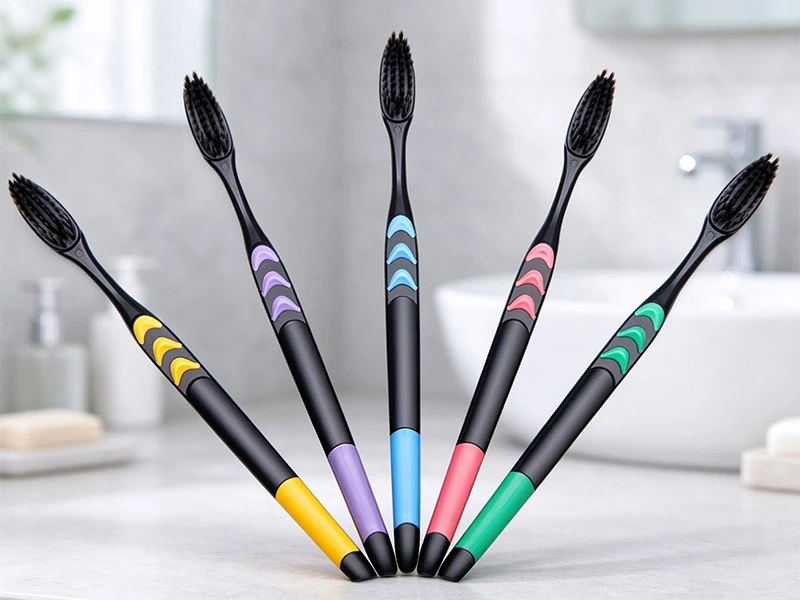
On the manual toothbrush side, domestic capacity remains highly concentrated in the Yangtze River Delta and Pearl River Delta regions. The Yangzhou cluster produces approximately 7.5 billion toothbrushes annually, accounting for one in every three toothbrushes sold globally, with a complete supporting ecosystem spanning bristles, molds, injection molding, and packaging. Larger OEM players have the capability to fulfill private-label orders for international retail giants, requiring certifications such as ISO, BRC, and BSCI, with factory audits covering production environment cleanliness and quality management processes. Yet industry analysis notes that manual toothbrush OEM has long faced homogenized competition and narrowing margins, with the scale-driven model losing efficacy and some manufacturers turning to eco-friendly materials and high-end customization for differentiation.
By contrast, the electric toothbrush OEM segment shows greater growth elasticity and higher technical barriers. Market research data places the global electric toothbrush OEM and ODM market at approximately 17 billion yuan in 2025, projected to approach 29.3 billion yuan by 2032, representing a compound annual growth rate of about 8.1%. Production capacity is concentrated in Shenzhen, Dongguan, and Ningbo, cities with strong electronics manufacturing foundations, with services spanning industrial design, motor and battery assembly, and finished-product certification. Brands, particularly emerging online-native players, increasingly outsource production to accelerate time-to-market and reduce fixed-asset exposure. Competitive focus on the manufacturing side has accordingly shifted toward integration capabilities for magnetic levitation motors, noise reduction, and smart sensing, as well as coverage of export certifications including CE, FDA, and ISO13485.
Notably, the two OEM segments are not entirely separate. Some manufacturers handling both manual and electric orders are leveraging bristle-planting expertise and quality control experience accumulated in manual toothbrush production to extend into electric brush head supply. Meanwhile, steady demand for replacement brush heads from electric toothbrush brands offers traditional manufacturers a channel into the growth segment. Industry observers suggest that whether OEM players can secure favorable positions in the electric category will depend on their willingness to collaborate on R&D and the completeness of their certification systems, rather than price competition alone.
We use cookies to offer you a better browsing experience, analyze site traffic and personalize content. By using this site, you agree to our use of cookies. Privacy Policy